The Definite Guide to AI Marketing: Demystifying the Technology, Use Cases, and Strategic Implementation
In the fast-evolving landscape of modern business, few concepts have generated as much conversation—and confusion—as Artificial Intelligence (AI) in marketing. Once a futuristic concept confined to science fiction or the experimental budgets of tech giants, AI has transitioned into an essential utility for day-to-day marketing operations.
In a world where consumer attention spans are shrinking and the volume of digital data is expanding exponentially, marketers face an ongoing challenge: how to deliver the right message to the right person at the precise moment it matters most. Traditional manual methods, while foundational, struggle to scale to meet these demands. AI offers a way to analyse vast datasets, automate repetitive tasks, and design personalised customer experiences.
Whether you are a marketing student seeking to build future-proof skills, a mid-career professional looking to modernise your toolkit, or a business owner striving to scale operations, this guide is designed to demystify AI marketing. We will strip away the technical jargon, explore the core technologies powering these tools, examine practical use cases, and outline a step-by-step blueprint for implementing AI in your marketing strategy safely and effectively.
1. Demystifying the Tech: How AI Actually Works in Marketing
To leverage AI effectively, you do not need to write complex algorithms, but you do need to understand the underlying engines that power these tools. When we talk about “AI in marketing,” we are actually referring to a suite of distinct yet interconnected technologies.
Let us break down the four primary pillars of marketing AI using simple, real-world analogies.
┌──────────────────────────────────────────┐
                  │          AI Marketing Engines            │
                  └────────────────────┬─────────────────────┘
                                       │
         ┌───────────────────┬─────────┴─────────┬───────────────────┐
         ▼                   ▼                   ▼                   ▼
┌─────────────────┐ ┌─────────────────┐ ┌─────────────────┐ ┌─────────────────┐
│Machine Learning │ │Natural Language │ │ Computer Vision │ │   Predictive    │
│      (ML)       │ │Processing (NLP) │ │                 │ │    Analytics    │
└─────────────────┘ └─────────────────┘ └─────────────────┘ └─────────────────┘
Machine Learning (ML): The Pattern Recogniser
At its core, Machine Learning is the science of getting computers to act without being explicitly programmed. Instead of writing rigid rules (e.g., “If a customer buys shoes, show them socks”), ML models are fed large quantities of historical data. The system analyses this information, identifies hidden patterns, and adjusts its behaviour automatically over time.
-
Marketing Application: Customer segmentation and behavioural clustering.
-
The Analogy: Imagine an incredibly observant librarian. If thousands of people walk into the library, the librarian notices that people who borrow historical biographies also tend to pick up memoirs and historical fiction, even if they never ask for recommendations. Over time, the librarian begins grouping these books together on display tables, anticipating what visitors want before they even realize it themselves.
Natural Language Processing (NLP): The Communicator
Natural Language Processing is the branch of AI that enables computers to understand, interpret, generate, and manipulate human language. It bridges the gap between structured computer code and the messy, nuanced way humans speak and write.
-
Marketing Application: Conversational chatbots, automated copy-writing assistants, and sentiment analysis (scanning social media to determine if reviews are positive, neutral, or negative).
-
The Analogy: Think of NLP as an incredibly skilled multilingual diplomat. This diplomat doesn’t just translate words literally; they understand local idioms, sarcasm, emotional undertones, and cultural context, allowing them to draft letters and hold conversations that feel natural and authentic.
Computer Vision: The Visual Analyst
Computer Vision training allows computers to “see” and interpret visual data from the world, such as digital images, videos, and graphics. By breaking down images into pixels and analyzing color, shapes, and patterns, AI can categorize visual content with high precision.
-
Marketing Application: Visual search (where users upload a photo to find a product), social media brand monitoring (identifying when your logo appears in user-generated photos, even if the brand isn’t explicitly tagged in the text), and creative analysis.
-
The Analogy: Imagine an art curator with a photographic memory who has analyzed every painting ever created. When you show them a new image, they can instantly tell you the primary colours, identify objects in the background, match the aesthetic style to existing design trends, and suggest which audiences will find it visually appealing.
Predictive Analytics: The Trend Forecaster
Predictive analytics uses historical data, statistical algorithms, and machine learning techniques to identify the likelihood of future outcomes based on historical patterns. It doesn’t predict the future with absolute certainty, but it calculates the probability of specific events occurring.
-
Marketing Application: Lead scoring (identifying which prospects are most likely to buy) and churn prediction (flagging customers who are showing signs of leaving).
-
The Analogy: Think of predictive analytics as a highly experienced meteorologist. By analysing historical weather patterns, atmospheric pressure, and current wind speeds, they cannot guarantee it will rain at exactly 2:03 PM, but they can advise you with high confidence that there is an 85% chance of rain this afternoon, prompting you to pack an umbrella.
2. The Evolution: From Traditional to AI-Driven Marketing
To appreciate the impact of AI, it is helpful to look at how marketing methodologies have evolved. Traditional digital marketing has often been characterized by manual workflows, generalized assumptions, and reactive analysis. AI-driven marketing, by contrast, relies on automation, granular real-time data, and proactive modeling. 
| Marketing Dimension | Traditional Digital Marketing | AI-Driven Marketing |
| Audience Segmentation | Broad, static demographics (e.g., “Women aged 25–34 in urban areas”) | Micro-segments updated in real-time based on actual behavior and intent |
| Campaign Optimization | Manual A/B testing; reviews performance data weekly or monthly | Continuous automated multivariate testing and real-time budget reallocation |
| Personalization | Simple token insertion (e.g., adding “First Name” to an email greeting) | Dynamic content generation based on past browsing history, device, and time of day |
| Data Analysis | Reactive; looking at historical dashboards to see “what happened” | Proactive; using predictive models to forecast future trends and customer behaviors |
| Content Creation | Manual drafting, design, and translation from scratch | Human-guided generative drafting, automated localisation, and multi-format scaling |
The Core Benefits of AI-Driven Marketing
The shift toward AI-driven workflows offers three fundamental advantages:
-
Efficiency at Scale: AI can execute repetitive tasks—such as formatting ad variants, cleaning database lists, or sending trigger-based emails—in milliseconds. This frees up human marketers to focus on high-level strategy, creative concepts, and brand positioning.
-
Hyper-Personalization: In traditional frameworks, treating every customer as an individual is operationally impossible. AI analyses individual digital footprints in real-time, enabling businesses to scale highly tailored experiences to millions of consumers simultaneously.
-
Proactive Decision-Making: Instead of waiting for a campaign to end to analyse its failures, AI-driven platforms can flag under-performing elements in real-time, allowing teams to adjust strategies mid-campaign and minimise wasted ad spend.
3. Deep Dive: Key Use Cases of AI in Marketing
To understand how AI functions in the real world, let’s explore five primary pillars of marketing operations, detailing how AI tools are used and the workflows they improve.
┌───────────────────────────────────────┐
                      │    Pillars of AI Marketing Practice   │
                      └───────────────────┬───────────────────┘
                                          │
         ┌───────────────────┬────────────┴────────────┬───────────────────┐
         ▼                   ▼                         ▼                   ▼
┌─────────────────┐ ┌─────────────────┐       ┌─────────────────┐ ┌─────────────────┐
│Content & Copy   │ │Segmentation &   │       │Predictive Lead  │ │Conversational   │
│   Generation    │ │ Personalization │       │     Scoring     │ │    Marketing    │
└─────────────────┘ └─────────────────┘       └─────────────────┘ └─────────────────┘
Pillar 1: Content Creation & Copywriting
Generative AI tools have transformed the creative department. Rather than replacing writers, these systems function as collaborative partners that help overcome blank-page syndrome and accelerate production timelines.
-
Key Tools: Jasper, ChatGPT (OpenAI), Claude (Anthropic), Midjourney (visuals), Runway (video generation).
-
Practical Workflow:
-
Ideation: A marketing team prompts an LLM (Large Language Model) to generate 15 unique blog post angles addressing pain points faced by remote project managers.

-
Drafting: The marketer selects the best angle and provides the AI with a structured outline, brand guidelines, and a specific tone of voice (e.g., “professional yet approachable”). The AI drafts a rough draft of the post.
-
Refinement & Localisation: The human editor refines the copy to ensure factual accuracy and brand alignment. The draft is then run through translation modules to create localised variations for international markets.
-

Takeaway: The most effective content workflow uses AI for scale and speed, but relies on human oversight to verify accuracy, preserve brand voice, and inject unique perspectives.
Pillar 2: Customer Segmentation & Personalization
Modern consumers expect brands to understand their individual preferences. Two classic examples of AI-driven personalization are Netflix’s recommendation engine and Spotify’s Discover Weekly. Both platforms analyze billions of data points—such as search history, skip rates, time of day, and physical location—to construct a highly customised user experience.
-
Key Tools: HubSpot, Salesforce Marketing Cloud, Dynamic Yield, Optimizely.
-
Practical Workflow:
-
Behavioural Analysis: An e-commerce user browses a website looking at waterproof hiking boots but leaves without purchasing.
-
Dynamic Triggers: The AI recognises this high-intent behaviour and triggers a personalised email sequence. Instead of a generic coupon, the email contains a detailed care guide for waterproof materials, followed by a dynamically generated showcase of the specific boots they viewed, complete with real-time stock availability.
-
On-Site Adaption: When the user returns to the website, the homepage banner adapts to display outdoor gear rather than athletic apparel.
-
Pillar 3: Predictive Lead Scoring & Sales Forecasting
In B2B marketing, sales teams often struggle with lead quality, spending valuable hours chasing prospects who are not ready to buy. Predictive lead scoring uses machine learning to assign a dynamic value to leads based on their likelihood to convert.
┌─────────────────────────────────────────────────────────────────────────┐
│                    Predictive Lead Scoring Flow                         │
│                                                                         │
│  [Prospect Behaviour]                                                    │
│    ├── Downloads Whitepaper  ──► +15 pts                                │
│    ├── Visits Pricing Page   ──► +30 pts                                │
│    └── Unsubscribes / Inactive ──► -20 pts                               │
│                                                                         │
│  [AI Core Model] ──► Analyzes Historical Conversion Patterns            │
│                                                                         │
│  [Output] ──► Identifies "High-Value" Leads for Sales Team Action       │
└─────────────────────────────────────────────────────────────────────────┘-
Key Tools: HubSpot Predictive Lead Scoring, 6sense, Albert, ZoomInfo.
-
Practical Workflow:
-
Data Consolidation: The AI gathers behavioral data from multiple touchpoints (web visits, email opens, social media engagement, company size, and job titles).
-
Pattern Recognition: The algorithm compares this data against historical customer journeys. It identifies that prospects who visit the pricing page twice and download a specific whitepaper within 7 days have an 80% higher conversion rate.
-
Prioritisation: The platform automatically flags these high-value leads and pushes them to the sales team’s CRM, enabling rep outreach at the moment of highest intent.
-
Pillar 4: Ad Targeting & Programmatic Advertising
Programmatic advertising uses machine learning to automate the buying and placement of ads in real-time. Instead of negotiating ad placements manually, platforms use real-time bidding to target specific users within milliseconds of a page loading.
-
Key Tools: Meta Advantage+, Google Performance Max (PMax), The Trade Desk.
-
Practical Workflow:
-
Creative Variations: A marketer uploads five headlines, five images, and three descriptions into Google PMax.
-
Dynamic Assembly: The AI automatically mixes and matches these elements to find the highest-performing combinations for different audiences.
-
Real-Time Bidding: When a user matching the target profile loads a webpage, the AI evaluates the bid’s value, calculates the likelihood of a click or conversion, and places the bid—all in the fraction of a second it takes for the website to load.
-
Budget Allocation: The system automatically shifts budget away from under-performing ad variations to those showing higher conversion rates.
-
Pillar 5: Conversational Marketing
Gone are the days of rigid, frustrating “if/then” chatbots that break down at the first sign of a complex sentence. Modern conversational marketing platforms use NLP and generative AI to handle nuanced, open-ended customer queries.
-
Key Tools: Intercom, Drift, ManyChat, Zendesk.
-
Practical Workflow:
-
Initial Triage: A visitor lands on an enterprise software website at 11:00 PM and asks, “Do you integrate with Salesforce, and how does your pricing model scale?”
-
Context-Aware Response: The AI agent reads the site’s technical documentation and instantly responds: “Yes, we integrate with Salesforce natively. Our pricing scales based on active monthly users. Would you like to see our tiered pricing table or speak to an implementation specialist tomorrow?”
-
Seamless Han-doff: If the visitor requests a call, the AI pulls up the sales team’s calendar and schedules a meeting directly within the chat window.
-
4. Blueprint: How to Implement AI in Your Marketing Strategy
Adopting AI can feel overwhelming. Many organisations make the mistake of purchasing expensive software suites before they have a clear strategy or clean data. To avoid these pitfalls, follow this step-by-step implementation framework.
┌─────────────────────────────────────────────────────────┐
│            AI Marketing Adoption Blueprint              │
├─────────────────────────────────────────────────────────┤
│                                                         │
│  [Step 1] Define Pain Points & Clear Goals              │
│     │                                                   │
│     ▼                                                   │
│  [Step 2] Clean and Consolidate Your Data               │
│     │                                                   │
│     ▼                                                   │
│  [Step 3] Choose the Right Tool Stack (Low-to-High)     │
│     │                                                   │
│     ▼                                                   │
│  [Step 4] Upskill and Train Your Team                   │
│     │                                                   │
│     ▼                                                   │
│  [Step 5] Test, Measure, and Iterate Continuous         │
│                                                         │
└─────────────────────────────────────────────────────────┘
Step 1: Identify Pain Points & Define Goals
Do not adopt AI just for the sake of using a trendy technology. Start by identifying your team’s most significant bottlenecks. Is it taking too long to write weekly blog posts? Are your sales reps spending too much time chasing cold leads? Are your ad budgets yielding lower returns?
Clearly define your objectives (e.g., “We want to reduce the time spent on content drafting by 30%” or “We want to increase our email open rates by 15% using personalized send-time optimization”).
Step 2: Clean and Consolidate Your Data
AI models are entirely dependent on the quality of the data they ingest. If your customer data is scattered across multiple spreadsheets, outdated, or filled with duplicate entries, your AI implementations will produce inaccurate results (often referred to as “garbage in, garbage out”).
Prioritize cleaning your CRM, merging duplicate contact records, and standardizing how user data is collected across touchpoints.
Step 3: Choose the Right Tool Stack
You do not need to invest in enterprise-level AI systems on day one. Start with low-barrier, accessible tools before scaling to custom solutions.
-
Phase 1 (Low-Barrier): Use built-in AI features in tools you already own (e.g., HubSpot’s content assistants, Canva’s Magic Write, or Google Ads’ built-in targeting features).
-
Phase 2 (Specialised): Incorporate stand-alone productivity tools like ChatGPT Plus, Claude, or Midjourney for content production and brainstorming.
-
Phase 3 (Enterprise): Adopt advanced platforms like Albert, 6sense, or enterprise-tier Salesforce instances to run automated campaigns across multiple channels.
Step 4: Train Your Team & Upskill
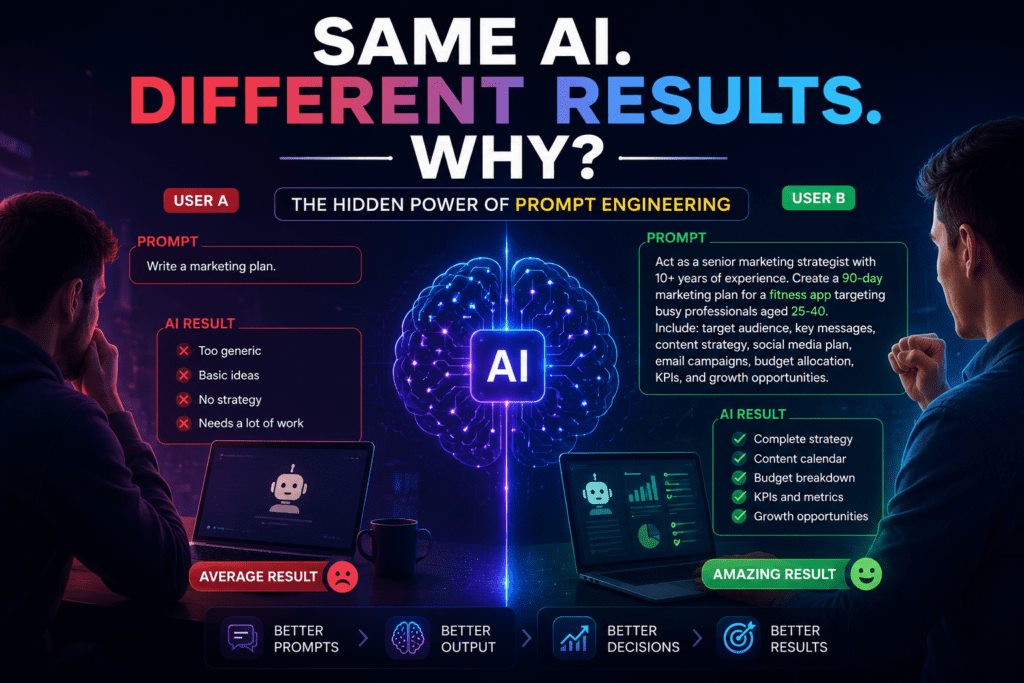
The best tools are useless if your team does not know how to interact with them. Invest time in training your marketers on prompt engineering, AI ethics, and data literacy. Encourage a culture of experimentation where team members feel safe testing AI tools, sharing their findings, and refining processes.
Step 5: Test, Measure, and Iterate
Treat your AI initiatives as experiments. Run A/B tests to compare your traditional workflows against your AI-augmented processes.
For example, test manual subject lines against AI-generated, personalised variations. Monitor key performance metrics (KPIs) closely and adjust your strategy based on hard data rather than intuition.
5. Ethical Considerations & The Human Element
As AI becomes more integrated into marketing operations, it brings critical ethical responsibilities. AI should not be viewed as an unchecked replacement for human workers, but rather as an assistant that requires guidance and guardrails.
The Balance of Automation and Human Creativity
While AI can analyse data and write copy at lightning speeds, it lacks lived experience, authentic emotion, and genuine empathy. It cannot understand the subtle nuances of human culture or produce truly original creative leaps. A brand that relies entirely on automated, unchecked AI content risks blending into a sea of generic, repetitive material and losing its distinct brand identity.
Critical Challenges to Address
-
Data Privacy (GDPR/CCPA): AI systems require significant amounts of data to function. Marketers must ensure that their collection, storage, and processing practices comply with global regulations like the General Data Protection Regulation (GDPR) and the California Consumer Privacy Act (CCPA). This includes obtaining explicit consent and providing transparency around how customer data is utilised.
-
Algorithmic Bias: Machine learning models learn from historical data. If that historical data contains human biases, the AI will learn and perpetuate those biases. For instance, an ad targeting algorithm might inadvertently exclude certain demographics from high-paying job listings based on historical patterns of discrimination. Marketers must audit their outputs to ensure fairness.
-
Intellectual Property (IP) Concerns: Generative AI models are trained on massive public datasets, which often include copyrighted works. The legal landscape around AI-generated content is complex and evolving. Organisations should establish clear internal guidelines regarding what types of AI-generated assets are safe for commercial use.
-
Authenticity and Trust: If customers feel they are being misled by hyper-realistic AI systems or deceitful chat-bots, brand trust can erode quickly. Transparency is essential. If you use AI to generate highly realistic product displays or host customer support interactions, be transparent when users are interacting with synthetic media or an automated agent.

The Golden Rule of AI Marketing: Keep the human “in the loop.” Use AI to handle the heavy lifting of data analysis, optimisation, and initial drafting, but rely on human creativity, empathy, and ethical judgment to finalize every campaign.
6. The Future of AI Marketing
Looking ahead over the next 3 to 5 years, several emerging trends are poised to reshape the marketing landscape:
-
Autonomous AI Marketing Agents: We are moving past simple static tools toward goal-oriented, autonomous agents. Instead of manually setting up workflows, a marketer might instruct an AI agent: “Run a lead-generation campaign for our new eBook targeting product managers in the UK, keep the budget under $2,000, and optimise for cost-per-acquisition.” The agent will build, launch, analyze, and optimise the campaign autonomously, reporting back with high-level performance insights.
-
Multi-modal Generative Video at Scale: Creating high-quality video content has traditionally been a resource-intensive endeavour. Emerging generative video models will allow marketers to produce customized, high-definition video advertisements from text prompts, making hyper-personalized video campaigns viable for businesses of all sizes.
-
Voice Search and AI Search Engine Optimisation (AIO): As consumers increasingly use AI engines (like Search Generative Experiences, Gemini, and ChatGPT) to answer queries directly, search traffic patterns will shift. Rather than optimisation focusing solely on blue links on a traditional search page, SEO strategies will adapt to ensure brands are cited as trusted sources in conversational AI answers.
7. Conclusion & Actionable FAQ
AI is transforming marketing from an art form based primarily on intuition into a structured discipline combining deep human creativity with data science. By understanding how these technologies function, evaluating practical use cases, and adopting a structured, step-by-step implementation framework, you can leverage AI to scale your campaigns, lower operational bottlenecks, and design more personal experiences for your audience.
The journey toward AI marketing does not require a degree in computer science. It begins with curiosity, a willingness to experiment, and a commitment to preserving the essential human element that lies at the heart of all successful communication.
Frequently Asked Questions
Q1: Will AI replace human marketers?
A: AI is highly unlikely to replace marketers who learn to adapt. Instead, marketers who leverage AI will likely replace those who do not. AI is exceptional at automating repetitive tasks, analysing complex datasets, and drafting initial variations. However, it lacks the empathy, emotional intelligence, strategic judgement, and creative ingenuity needed to design truly memorable campaigns. The future of marketing lies in a collaborative approach where human creativity guides machine execution.
Q2: How much does it cost to start with AI marketing?
A: You can begin implementing AI marketing with a budget of zero. Many software tools you already use daily—such as Google Analytics, HubSpot, Canva, and Mailchimp—have built-in AI capabilities that require no additional fee. Free tiers of generative engines like ChatGPT and Claude allow for low-risk testing. As your team identifies clear use cases and demonstrates ROI, you can scale your investment to paid tool tiers (ranging from $20 to $100 per user per month) or custom enterprise platforms.
Q3: How do I get started with AI marketing if I don’t have a technical background?
A: You do not need a background in coding to use AI tools effectively. Start by using intuitive, chat-based interfaces like ChatGPT, Claude, or Copilot. Focus on learning how to write clear, structured instructions (called “prompt engineering“). Take advantage of free, highly-rated educational resources such as HubSpot Academy, Google’s AI courses, and industry newsletters to build your conceptual understanding. The best way to learn is by doing: select one minor, manual marketing task in your routine and attempt to optimise it using a free AI assistant.