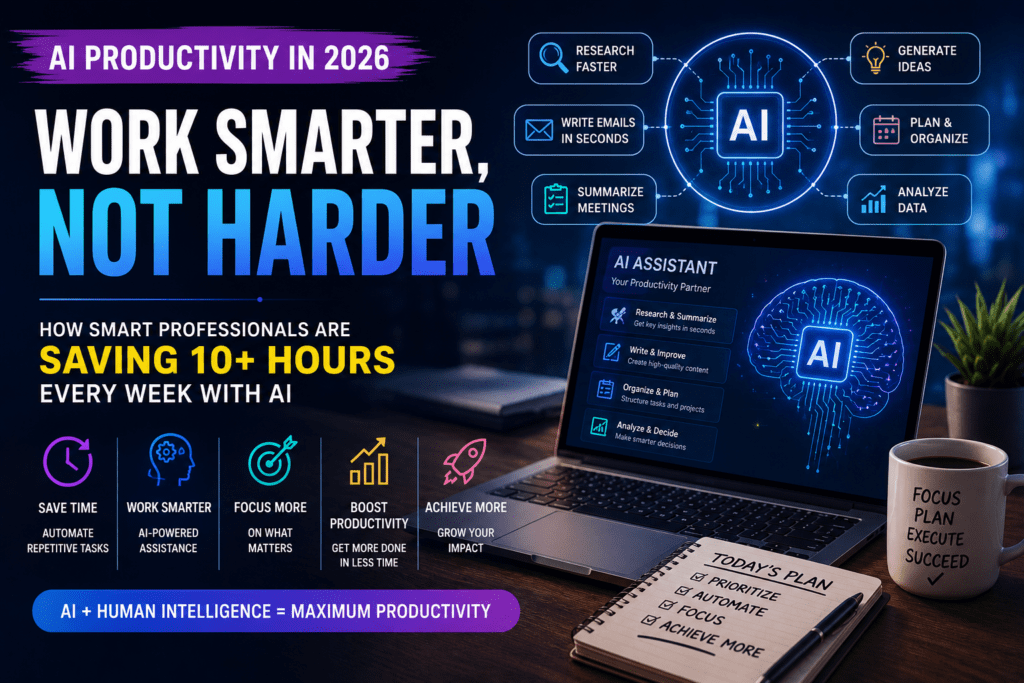
AI Productivity in 2026: How Smart Professionals Are Saving 10+ Hours Every Week With Artificial Intelligence
Introduction: The Productivity Crisis Nobody Talks About
Most professionals don’t have a knowledge problem.
They have a time problem.
Every day, millions of people start work with good intentions. They create to-do lists, set goals, and plan productive days.
Yet somehow the day disappears.
Emails pile up.
Meetings consume hours.
Research takes longer than expected.
Content creation becomes exhausting.
Administrative tasks multiply.
And by the end of the day, many professionals feel busy but not productive.
The problem isn’t a lack of effort.
The problem is that modern work contains countless repetitive tasks that consume time without creating significant value.
This is where artificial intelligence is beginning to change everything.
Unlike previous productivity tools that focused on organisation, AI can actively assist with thinking, researching, writing, analysing, planning, and problem-solving.
For the first time, professionals have access to technology that doesn’t simply store information—it helps process it.
The result is a fundamental shift in how productive work gets done.
But there’s an important catch.
Many people are using AI incorrectly.
They’re treating AI like a search engine instead of a productivity partner.
As a result, they’re achieving only a fraction of the potential benefits.
The professionals seeing the biggest gains aren’t necessarily using more AI tools.
They’re using AI more strategically.
Why Traditional Productivity Advice Is Failing
For years, productivity experts promoted the same ideas:
- Create better to-do lists
- Wake up earlier
- Use time-blocking
- Eliminate distractions
- Improve organisation
While these strategies still have value, they don’t address a major challenge of modern work.
Many tasks simply require a large amount of mental effort.
Consider the average professional’s day:
- Writing emails
- Researching topics
- Creating reports
- Summarising meetings
- Developing presentations
- Generating ideas
- Organising information
These activities consume hours of cognitive energy.
Traditional productivity systems focus on managing time.
AI helps reduce the amount of effort required to complete the work itself.
This is a significant difference.
The New Productivity Formula
For decades, productivity was often measured as:
Time + Effort = Output
Today, AI introduces a new equation:
Time + AI Assistance + Human Judgement = Greater Output
The goal is not to work harder.
The goal is to achieve more valuable outcomes with less repetitive effort.
This shift allows professionals to spend more time on:
- strategy
- creativity
- decision-making
- innovation
while AI handles many of the repetitive tasks that slow progress.
The Hidden Productivity Drain
Most people underestimate how much time they lose to small tasks.
Consider a typical week.
You might spend:
- 4 hours writing emails
- 3 hours creating meeting summaries
- 5 hours researching information
- 4 hours brainstorming ideas
- 3 hours organising notes
That’s nearly 20 hours spent on activities that AI can partially accelerate.
This doesn’t mean AI replaces human involvement.
It means AI reduces friction.
Small time savings compound rapidly.
Saving just one hour per day creates:
- 5 hours per week
- 20 hours per month
- 240 hours per year
That’s equivalent to six full workweeks.
AI Is Not Replacing Productivity—It’s Redefining It
Many people worry that AI will make human skills less valuable.
The opposite may be true.
As AI handles repetitive work, uniquely human abilities become more important.
These include:
- critical thinking
- creativity
- emotional intelligence
- leadership
- strategic planning
The future belongs not to people who compete with AI, but to people who learn how to collaborate with it.
The most productive professionals are becoming AI-enhanced rather than AI-dependent.
How High Performers Are Using AI Today
The biggest productivity gains often come from simple use cases. 
Let’s look at how professionals are already benefiting.
AI Productivity Use Cases Across Different Professions
Artificial intelligence is not limited to marketers or content creators.
Professionals across industries are discovering ways to improve efficiency.
Business Owners
- Draft proposals
- Create marketing plans
- Analyse customer feedback
Teachers
- Generate lesson plans
- Create quizzes
- Summarise educational materials
Developers
- Generate code snippets
- Debug problems
- Document projects
Freelancers
- Write client proposals
- Create content outlines
- Manage project workflows
Students
- Summarise research
- Create study notes
- Organise assignments
The common theme is simple:
AI reduces repetitive work and allows professionals to focus on higher-value activities.
Place Here:
After: How High Performers Are Using AI Today
Research in Minutes Instead of Hours
Research is essential but time-consuming.
Whether you’re creating content, preparing a presentation, or evaluating a business opportunity, gathering information can take hours.
AI can accelerate this process by:
- summarising information
- identifying key themes
- generating research questions
- organising findings
Instead of starting with a blank page, professionals can begin with a structured foundation.
This dramatically reduces preparation time.
Smarter Content Creation
Content creation remains one of the largest productivity challenges.
Many professionals struggle with:
- writer’s block
- idea generation
- outlining
- editing
AI can help at every stage.
For example:
Instead of asking:
Write a blog post.
High performers ask:
Create a detailed outline for a 2,000-word article about remote work productivity for small business owners.
The result is a stronger starting point and less time spent planning.
Email Management Without the Headache
Email remains one of the biggest productivity killers.
Many professionals spend hours each week writing and responding to messages.
AI can help:
- draft replies
- summarise long conversations
- improve clarity
- adjust tone
- create templates
Rather than writing every message from scratch, professionals can focus on refining and personalising drafts.
Meeting Notes That Organise Themselves
Meetings generate valuable information.
Unfortunately, they also generate confusion.
Important details are often buried inside pages of notes.
AI can help transform raw notes into:
- summaries
- action items
- project updates
- task lists
This reduces the risk of missed information and improves accountability.
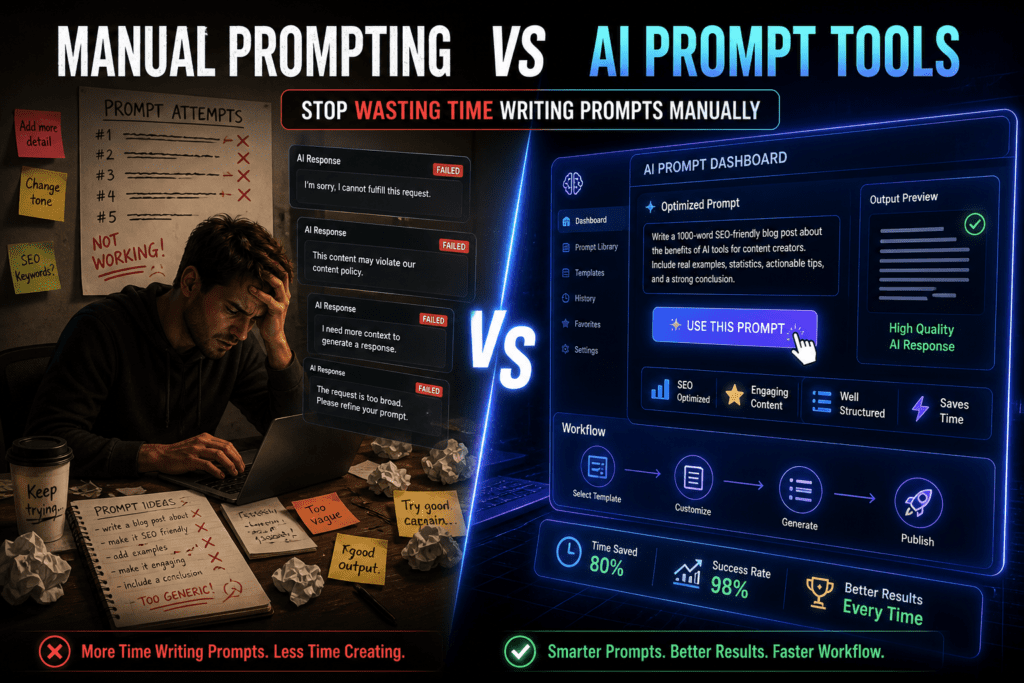
Why Prompt Engineering Is a AI Productivity Skill
One of the most overlooked aspects of AI productivity is prompt engineering.
Prompt engineering is the ability to provide clear instructions that help AI generate useful outputs.
Many users write prompts like:
Help me be productive.
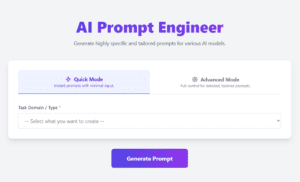
This is too vague.
A stronger prompt might be:
Act as a productivity consultant. Analyse my daily workflow and identify five repetitive tasks that could be automated or improved using AI.
The difference is significant.
Better prompts create better outcomes.
Case Study: Two Professionals, Two Different Results
Imagine two project managers.
Both use the same AI platform.
Both want help preparing for a client meeting.
Manager A
Prompt:
Help me prepare for a meeting.
Result:
Generic advice.
Manager B
Prompt:
Act as a senior project management consultant.
Help me prepare for a meeting with a software development client.
Generate discussion points, potential risks, project status questions, and follow-up recommendations.
Result:
A detailed preparation guide.
Same AI.
Different results.
The difference is communication.
Five Areas Where AI Creates the Biggest Productivity Gains
1. Information Processing
AI can analyse large amounts of information quickly.
Examples:
- reports
- research documents
- customer feedback
- meeting notes
This reduces the time required to identify important insights.
2. Planning and Organisation
AI can assist with:
- project planning
- content calendars
- task prioritisation
- workflow design
This helps professionals spend less time organising and more time executing.
3. Writing Assistance
AI excels at:
- outlines
- drafts
- summaries
- editing suggestions
The goal is not replacing writers.
The goal is accelerating the writing process.
4. Brainstorming
Creative work often begins with idea generation.
AI can provide:
- content ideas
- campaign concepts
- problem-solving approaches
- alternative perspectives
This helps overcome creative blocks.
5. Repetitive Administrative Work
Many administrative tasks follow predictable patterns.
AI can assist with:
- scheduling communications
- document formatting
- status updates
- routine reports
These small improvements create substantial cumulative savings.
The AI Productivity Trap Most People Fall Into
Ironically, some people become less productive after adopting AI.
Why?
Because they spend too much time experimenting with tools.
Instead of improving workflows, they constantly search for the next platform.
The result:
- tool overload
- workflow complexity
- reduced focus
The most productive professionals usually follow a different approach.
They master a few tools deeply rather than constantly switching between dozens of platforms.
AI Productivity Skills That Will Matter Most
As AI becomes standard in professional environments, certain skills will become increasingly valuable.
Strategic Thinking
AI can generate options.
Humans must evaluate them.
Prompt Engineering
Clear communication with AI systems will become a core workplace skill.
Critical Evaluation
Not every AI-generated response is correct.
Professionals must verify information and make informed decisions.
Creativity
Original ideas remain valuable.
AI can assist creativity, but it does not replace imagination.
Adaptability
Technology evolves quickly.
The ability to learn new systems will remain essential.
A Practical AI Productivity Workflow
Many people ask:
Where should I start?
Here’s a simple framework.
Step 1: Identify Repetitive Tasks
Ask yourself:
What activities consume time every week?
Examples:
- emails
- research
- content creation
- note-taking
Step 2: Test AI Assistance
Choose one task and experiment with AI support.
Start small.
Focus on measurable improvements.
Step 3: Build Repeatable Prompts
Create prompts that can be reused.
This reduces setup time and improves consistency.
Step 4: Review Outputs
AI should assist—not replace—human judgement.
Always review important outputs.
Step 5: Optimise Continuously
Measure:
- time saved
- quality improvements
- productivity gains
Then refine your process.
Signs You’re Using AI Effectively
Many people use AI every day but still fail to achieve meaningful productivity gains.
How can you tell if your workflow is improving?
You’re Spending Less Time on Repetitive Tasks
Administrative work becomes easier and faster.
You’re Producing Better Outputs
Reports, content, and presentations improve in quality.
You’re Making Decisions Faster
Information becomes easier to analyse and understand.
You’re Focusing More on Strategy
Less time is spent creating drafts and more time is spent improving outcomes.
You’re Saving Time Consistently
Even 30–60 minutes per day creates significant long-term benefits.
Effective AI use isn’t about generating more content.
It’s about creating more value.
The Future of AI Productivity
The next phase of AI productivity will move beyond content creation.
Future systems will likely:
- manage workflows
- coordinate projects
- anticipate information needs
- automate routine decisions
However, technology alone won’t determine success.
The most successful professionals will be those who combine AI efficiency with human expertise.
The future is not about working harder.
It’s about working smarter.
It’s time to move on AI Productivity.
My Experience Observing AI Productivity Trends
One trend has become increasingly clear.
The people who achieve the biggest productivity gains are not necessarily technical experts.
They’re often individuals who:
- understand their goals
- communicate clearly
- embrace experimentation
- focus on solving problems
AI rewards clarity.
The better you define objectives, the better the results become.
This is why prompt engineering is rapidly emerging as a valuable professional skill.
Common Myths About AI Productivity
Myth #1: AI Replaces Human Work
Reality:
AI assists human work.
Humans still provide judgement and direction.
Myth #2: More AI Tools Mean More Productivity
Reality:
Too many tools often create confusion.
Myth #3: AI Eliminates Creativity
Reality:
AI often enhances creativity by reducing repetitive work.
Myth #4: AI Productivity Is About Doing More Tasks
Reality:
True AI productivity is about creating more value.
AI helps professionals focus on higher-impact activities.
Key Takeaways
✅ AI is changing how productive work gets done.
✅ The biggest gains come from reducing repetitive effort.
✅ Prompt engineering dramatically improves AI effectiveness.
✅ Human judgement remains essential.
✅ Small productivity improvements compound over time.
✅ The future belongs to professionals who learn how to collaborate with AI.
What AI Cannot Do
Despite impressive capabilities, AI still has limitations.
It cannot replace:
- human empathy
- leadership
- personal experience
- ethical judgement
- creativity with real-world context
AI can process information quickly.
Humans provide meaning, purpose, and direction.
Understanding this balance is essential for long-term success.
The future of AI productivity will not be driven by AI alone.
It will be driven by people who know when to use AI and when to rely on human expertise.
Conclusion
Artificial intelligence is not simply another productivity tool.
It represents a new way of working.
By reducing repetitive tasks, accelerating information processing, and supporting decision-making, AI allows professionals to focus on the work that matters most.
The organisations and individuals that embrace this shift intelligently will gain significant advantages with AI Productivity techniques.
Not because they work harder.
Not because they use more tools.
But because they learn how to combine human intelligence with artificial intelligence effectively.
The future of productivity isn’t about replacing people.
It’s about empowering them.
And for those willing to adapt, the opportunities have never been greater.
Quick Productivity Audit

Ask yourself:
✓ How many hours do I spend writing emails each week?
✓ How much time do I spend researching information?
✓ How often do I create repetitive documents?
✓ Which tasks feel repetitive and predictable?
✓ Could AI assist with any of these activities?
If you can identify just one task that saves an hour each week, the productivity gains will compound significantly over time.